
Homer and Us
How the Will to Win Came to Look Ridiculous

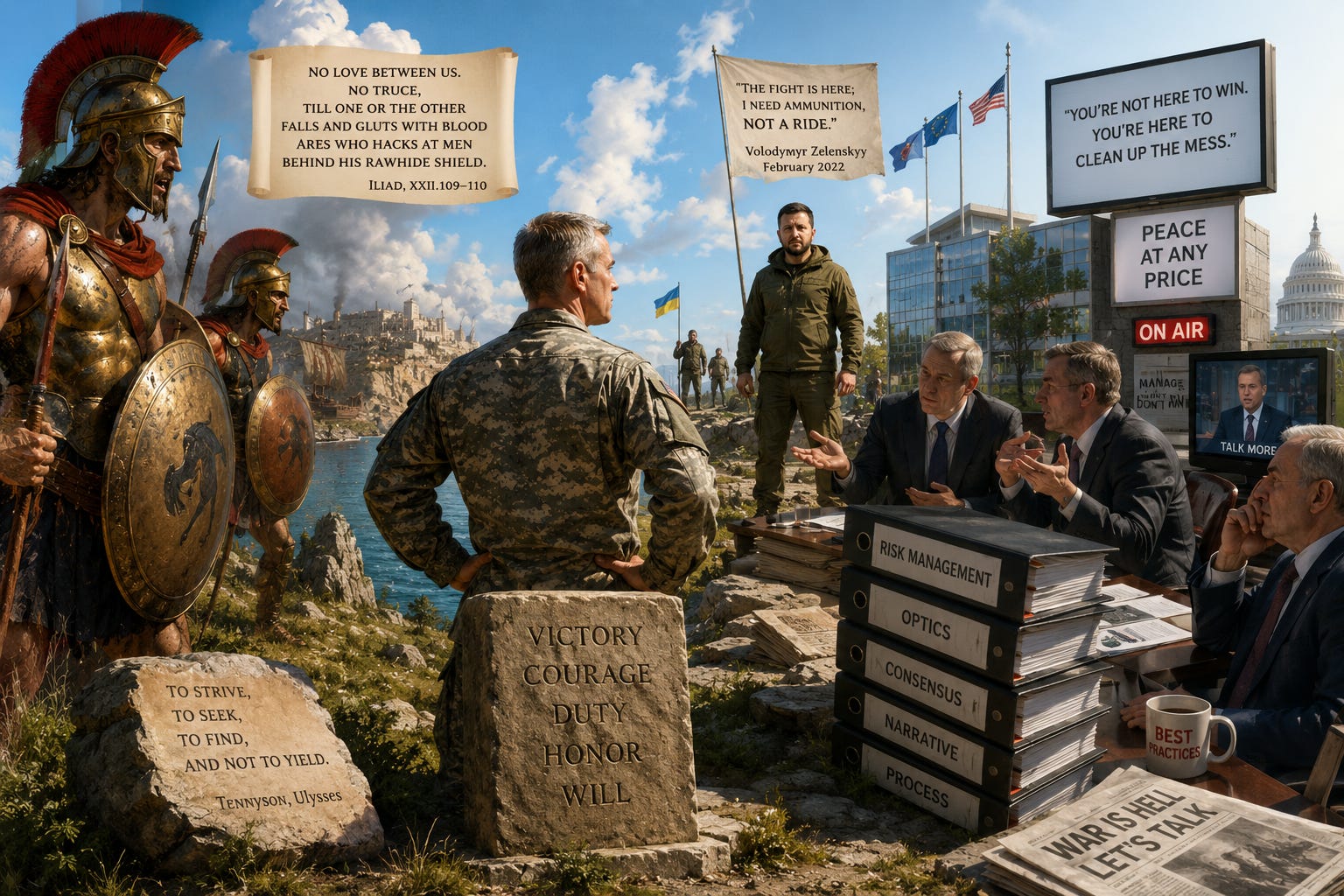
Christopher Nolan’s The Odyssey has provoked an enormous amount of controversy and debate. Viewers and critics argue about everything: its degree of historical accuracy, the legitimacy of its casting choices, the persuasiveness of the acting, the composition of the shots, the music, and much else besides. Most reviews agree that the film portrays the horrors of war and the profound psychological trauma it inflicts on those who fight.
This, however, is not a review of the film. It is a series of observations prompted, on the one hand, by the feverish reaction and excitement surrounding it and, on the other, by a comparison with our present reality.
Whether consciously or not, Nolan exposes the central contradiction of contemporary Western culture. He continues to employ the language of heroic epic, recreating Troy, Odysseus, monsters, and fate, while removing the moral premise from which epic itself arises: there is no escaping fate, and therefore one must face it directly, even when the chances of victory are slight.
The Homeric epic is a world in which “victory” is a value in its own right. One may condemn a particular war, or blame particular people for a particular defeat, but no one pretends that the outcome of war is irrelevant. People fight not for the sake of war itself but for a result: their own victory and the enemy’s defeat. One may cover oneself in glory along the way, and that certainly does no harm, but true glory must be crowned by the fall of Troy. The alternatives are therefore simple: Troy will either fall or stand. The Achaeans will either win or return home defeated and humiliated. The war will end in victory for one side and defeat for the other.
The emphasis placed by contemporary Western art on trauma, the horrors of war, and the deconstruction of the heroic myth as such—of which Nolan’s Odyssey is another example—creates the impression that the modern West no longer wishes to think or speak in terms of victory and defeat. Victory seems to be regarded with suspicion, as something associated with militarism, vanity, toxic male aggression, and a “primitive division” of the world into winners and losers. The “mature” person is supposedly the one who has understood the futility of struggle; anyone who still desires victory is seen as stranded in a remote heroic past and therefore appears ridiculous.
War Machine: The Comic Achilles
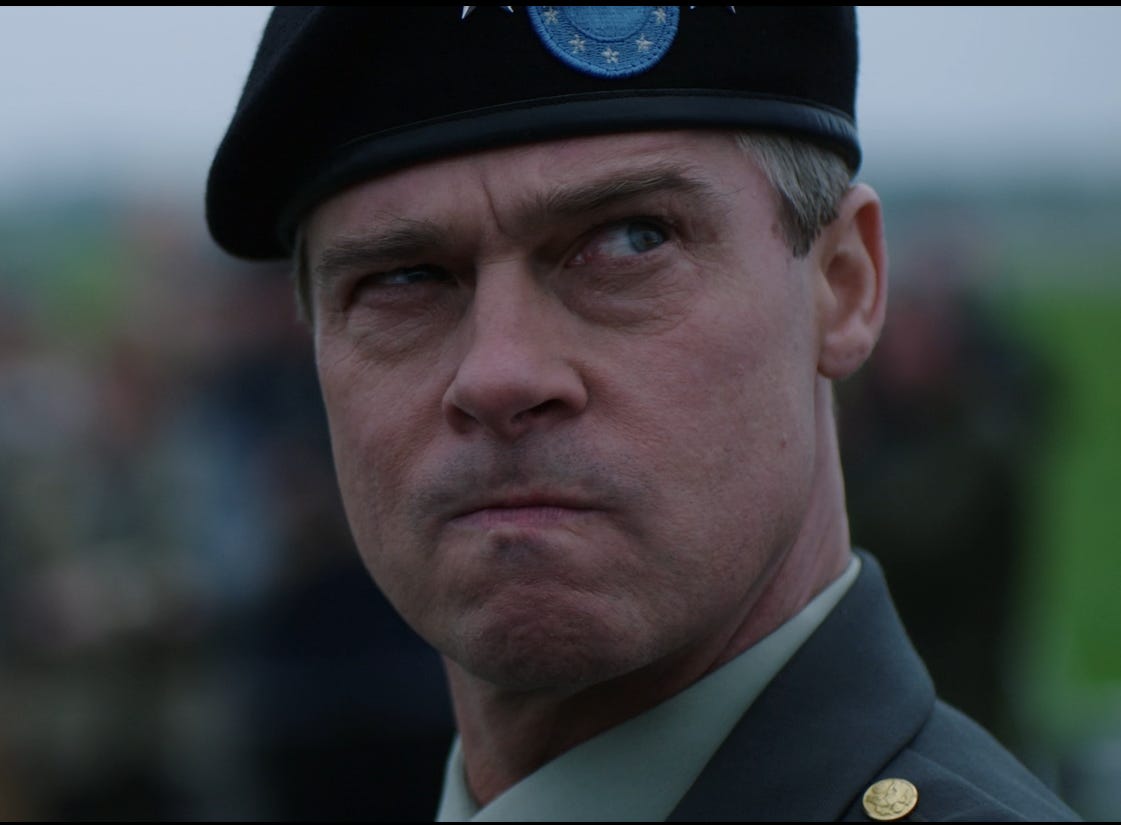
This is precisely the premise of the 2017 satire War Machine. Brad Pitt’s General McMahon is appointed commander of the coalition forces in Afghanistan. He takes the challenge seriously and wants to win the war—only to discover that his principal adversary is not the Taliban at all, but the American state machinery itself.
He has the body of a hero, the will of a hero, and the almost grotesque physical manner of a man who believes himself made for war. What we see is Achilles in a world where no one takes Achilles seriously. The echo of Pitt’s role in the 2004 film Troy, in which he played the great Myrmidon, is obvious.
The satire arises because McMahon continues to think in terms of victory in a political system that has long since lost any understanding of what victory is supposed to mean. He believes the war can be won through the right strategy, more troops, discipline, and personal will. Yet the American leadership wants no “victory” at all. As Pat McKinnon, the seasoned bureaucrat and US ambassador to Afghanistan, tells him: “You’re not here to win. You’re here to clean up the mess. … Just move the needle a little bit. Show everyone how all the graphs are pointing in the right direction.” In such a system, a general who seriously utters the word “victory” inevitably looks insane.
In 2017, this satire seemed persuasive. After years of campaigns in Iraq and Afghanistan, Western audiences readily accepted the idea that generals wanted to fight because they knew how to do nothing else, and that the desire for victory was a form of professional deformation. The film itself was based on the history of the US command in Afghanistan and was presented as a satire on ill-conceived US foreign policy, although some critics discerned in its protagonist the features of a tragic figure who comes into conflict with the very system within which he was formed and rose to success.
The Afghan war could not, in fact, be won through military will alone, because the US political leadership had failed to formulate a clear understanding of what victory was supposed to mean. The armed forces conquered the enemy—and did it professionally; the politicians, as so often happens, failed to make proper use of military success and ultimately turned it into a protracted political crisis that cost countless lives and vast sums of money.
Unfortunately, excessively broad and abstract conclusions are often drawn from particular events. That is exactly what happened here: the desire to win was declared foolish in itself. Every commander is always a little McMahon, always a little clown, while an epic hero such as Achilles or Odysseus is treated as a dangerous narcissist who ought to address his trauma instead of seeking glory beneath the walls of Troy.
Nolan’s Odyssey completes this evolution. Critics have observed that the film shifts the centre of gravity of Homer’s narrative towards trauma and the human experience of war. Such a reading is intelligible to the modern viewer: it allows one to sympathise with the hero without sharing his values, and to admire the epic after first stripping it of its heroic content.
The historical rhyme is striking. In War Machine, Brad Pitt portrays a parodic Achilles—a man who still wants to fight and win, although the surrounding world finds this absurd. Nolan returns to Troy itself, but views it almost exclusively through the horror of war and the trauma of those who came home from it. Questions of victory and politics—the very motivation of the epic’s heroes—are discarded as irrelevant. Between these two films lies the cultural path travelled by the West: from mocking the will to win to suppressing altogether the thought that victory can be a moral and political necessity.
The Anti-War Message
It is worth recalling that anti-war art, and cinema in particular, comes in two forms. One says that war is evil and must therefore be avoided; it consoles the viewer by inviting him to condemn violence and war as such, requiring nothing beyond compassion experienced in the safety of the cinema. The other says that a moment comes when evasion is impossible and a person must make a difficult and often unpleasant choice; it offers the viewer an example of action and urges him to draw practical conclusions.
Casablanca, made in 1942 in the midst of war, belongs to the second kind. Its hero wants precisely to sit the conflict out: a “neutral” bar in a neutral city, no allegiance to either side, “I stick my neck out for nobody.” The entire film describes how this position brings him to an unpleasant and uncomfortable choice. In the end, Rick gives up the woman he loves, his neutrality, and his peace: he puts her on a plane with her husband, a resistance leader, and joins the Resistance himself. The film’s anti-war meaning lies neither in a slogan nor in its general presentation, but in action: an adult must outgrow the temptation to condemn “war in general” when a very particular war has arrived and threatens those close to him and the world in which he lives. The film does not say, “War is terrible.” It says that some things are worse than war, and that evasion of one’s moral duty is among them. As a character in Mikhail Bulgakov puts it: “Cowardice was undoubtedly one of the most terrible vices. … No, philosopher, I disagree with you: it is the most terrible vice!”
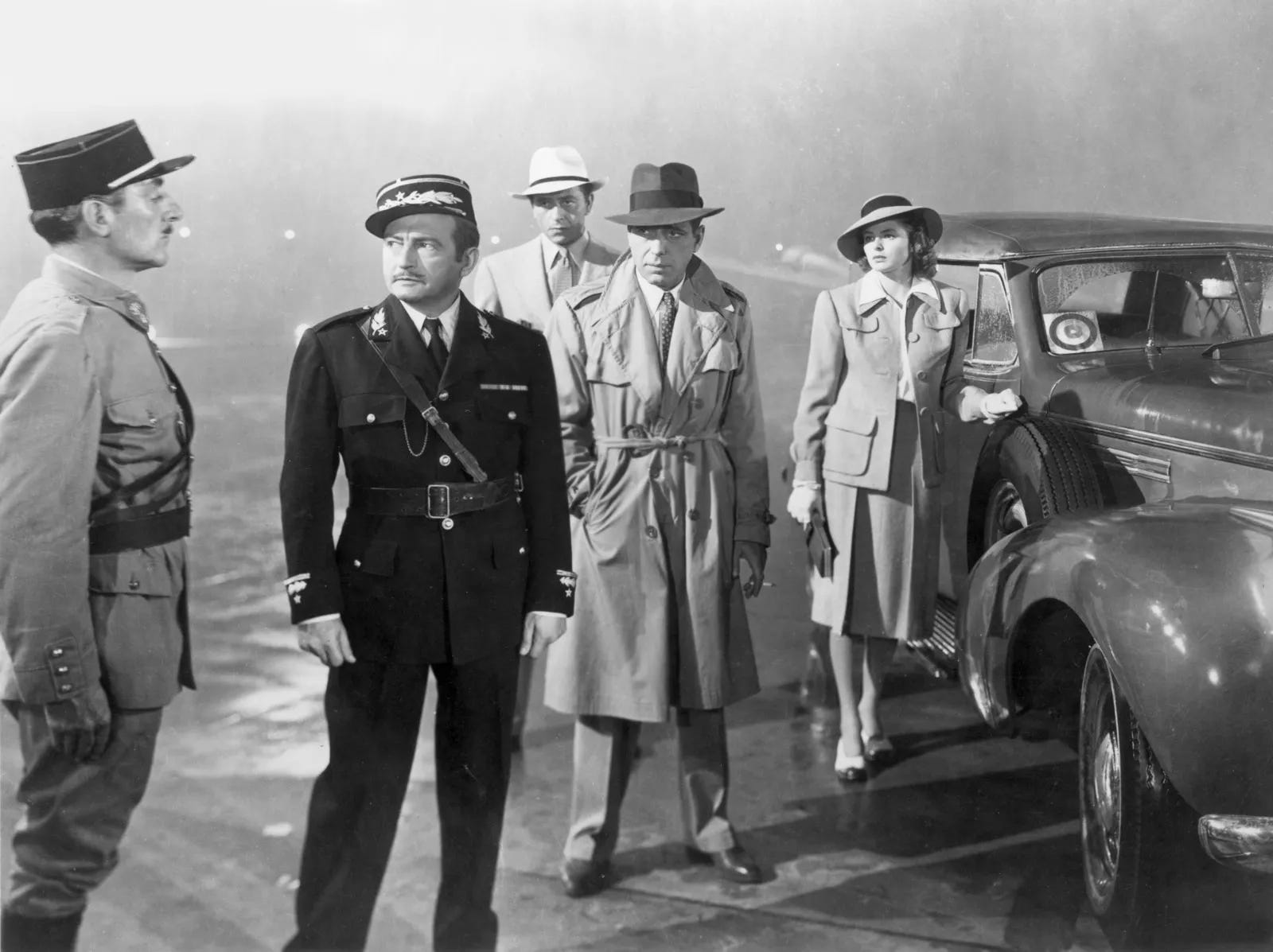
Nolan’s anti-war cinema, by contrast, belongs to the first kind. Three hours of accomplished imagery convey that war is frightening and bad. Yet “war is evil” is not even a thesis, still less an act. It is more like the weather: no one disputes it, and nothing follows from it. The anti-war message of Casablanca leads the viewer towards an understanding of the necessity of choice; Nolan’s leaves him sitting in his chair, moved and motionless.
The fifth year of a bloody war in Europe appears to impose new demands upon art. An honest anti-war statement must answer the question of what is to be done when war is already under way and evasion is impossible. Nolan instead produces a timeless “violence is evil,” appropriate to a prosperous peacetime year and almost indecent now, when Europe is living through its largest war since 1945. He has made precisely the kind of anti-war film from which nothing follows—at the very moment when a great deal ought to follow from it.
The Desire for Comfort and Peace
It would nevertheless be wrong to blame Christopher Nolan alone. The film resonated with viewers who evidently do not wish to see this simple distinction. Their blindness is voluntary, because not seeing is comfortable, whereas seeing imposes obligations. The viewer has been taught to regard compassion as a form of valour. A tear for the victims, declarations about the inadmissibility of war and violence—these become signs of belonging among the “good,” among those who feel.
This psychological comfort is greatest when someone else is available to fight on your behalf. It is easiest to denounce war from a safe distance while someone else spills blood—for example, Ukraine. One may even help Ukraine, but the assistance is measured out in quantities that leave its purpose entirely unclear. Plainly, it is not intended to secure victory, because “Russia cannot be defeated,” as we hear almost every day. What, then, is it intended to achieve? “Support Ukraine for as long as it takes”—yet after four years of war, no one has managed to explain how we are to know when the requisite “it” has been achieved. Ask what outcome the West desires and there is no answer: neither the defeat of the aggressor nor the liberation of the occupied territories, only that the war should drag on without becoming too loud. At best one hears something about “weakening Russia.” But what are the criteria of weakness, and why should recognition of territorial seizures—which is precisely the compromise over which Western politicians agonise—make Russia weaker rather than stronger?
The principal justification for this lethargy is a paralysing fear of escalation. The West insistently repeats that one must not provoke a nuclear power, and that any decisive step risks global apocalypse. Yet genuine fear of escalation is treated not by fleeing from escalation, but by a carefully designed strategy of deterrence that includes clear and forceful measures of de-escalation. The most important of these is to demonstrate visibly to the adversary that he is not feared. The equilibrium of deterrence always rested on an intelligible formula: we may die, but you will die with us. This is thoroughly Homeric—to look fate and death in the face in order to deprive the enemy of the illusion of impunity. The modern West, however, has unlearned this language. By constantly signalling its fear of crossing “red lines,” it merely assures the aggressor that he retains the initiative. In the end, the strategy of “preventing escalation” becomes an incentive to aggression.
The Refusal to Understand the Other
This mentality has a deeper root, one that Nolan’s Odyssey also illustrates and that explains why the West so persistently refuses to see whom it is dealing with. It is the refusal to understand the other as other—the same refusal that led Nolan to rewrite Odysseus, a man formed by the psychology of heroic epic at the end of the Bronze Age and the beginning of the Iron Age, as a traumatised contemporary. The approach to another consciousness is simple: either the other is constructed exactly as we are, with the same rationality and motives, in which case he is understood in advance; or he is unknowable and irrational, and therefore impossible to understand in principle, so there is no point in trying. This perspective cannot accommodate a third kind of consciousness: one that is structured somewhat differently from ours, yet can be understood through effort. And it is precisely within this third category that every Homeric hero exists—at once close to us and alien.
With Putin, the West chooses the first type. It reads him as a rational actor with legitimate interests who wants security, money, and status—in essence, a Western leader speaking with a Russian accent. Hence the endless faith in a negotiated formula: since he thinks as we do and sees the world as we do, there must be a bargain somewhere that satisfies both his interests and ours; if we have not yet found it, we must simply be searching badly and persuading him badly. When this approach fails yet again and Putin escalates in defiance of every apparent material advantage, the West leaps to the opposite pole—madman, irrational actor—and arrives at the same conclusion: we do not understand what he wants, so we must somehow wait until he calms down and avoid provoking the violent lunatic.
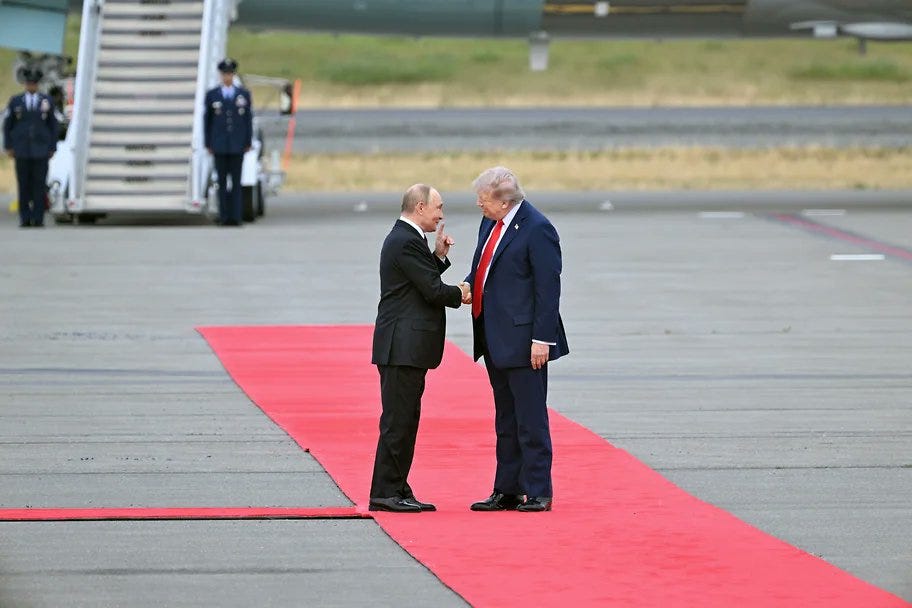
In reality, Vladimir Putin is entirely intelligible. He simply thinks and acts within precisely that supposedly “obsolete” paradigm: in categories of force, domination, the humiliation of the defeated, and triumph over them; in a predatory zero-sum world where another’s gain is your loss. He is neither a mirror nor a mystery, but a rational actor whose language is force.
Yet the very language Putin is capable of understanding has been purged from the West over decades as “obsolete,” “inhuman,” and therefore unacceptable in polite society. Unable to communicate its position to the other, the West is left either to plead with him to behave more quietly or to abandon communication altogether.
To understand does not mean to agree or accept. Understanding the enemy is the first condition of defeating him. One cannot overcome an adversary of whom one has no adequate conception. The post-heroic consciousness can imagine an enemy-Achilles: an alien will equal to one’s own and terrible, before which fear would at least be justified.
The present aggressor is made quite differently. He wants spoils without risk, not glory through risk; impunity, not an encounter with fate. He is not the greedy Agamemnon but a hyena that senses the lion has grown old and no longer wishes to fight, and becomes more brazen in direct proportion to what others are prepared to concede.
Its courage is a function of another’s softness. Every Western call for de-escalation, every “let us not provoke them,” every instalment of aid to Kyiv measured out so as not to anger Moscow confirms Vladimir Putin’s picture of the world: the prey is whimpering, therefore I may continue. The image of an unstoppable steamroller, the nuclear sabre-rattling, the rhetoric of inevitability—all of it is the same hyena wrapped in the old, moth-eaten hide of a bear. The masquerade works because the victim is afraid of the hide and does not even wish to check whether there is really a bear inside it.
“Victory Is Impossible”
The rhetoric of win-win is particularly helpless when confronted with an adversary who defines his own gain precisely as the enemy’s defeat. Since Russia seeks to deprive Ukraine of territory, sovereignty, and the right to determine its own future, no mutually beneficial settlement of these issues exists between Russia and Ukraine. Every Russian gain within this structure entails a Ukrainian loss. A “compromise” can determine only the scale of those losses; it cannot transform them into a common victory. This is war in its classical historical meaning—not a well-meaning European win-win, but a bloody and uncompromising win-lose. Troy will either hold or fall.
Contemporary Western language attempts to eliminate the very possibility of tragic conflict in which the interests of the parties are incompatible, justice requires coercion, and peace is achieved through the defeat of the party that began the war. The desire to win is therefore presented as intellectually primitive, while willingness to negotiate under any circumstances is proclaimed a sign of “maturity.” In reality, this “maturity” conceals an inability to acknowledge that some contradictions can be resolved only by changing the balance of power.
This obstinacy does not retreat even before facts. When Ukraine inflicts heavy blows on Russia, burns its oil-refining capacity, sinks its ships, and makes the war more costly for the aggressor year after year—that is, when the prospect of victory over Russia moves from abstract dream to something more tangible—the West attempts to ignore it. It continues to cajole Putin into sitting down at the table and remains prepared to give him part of Ukraine, because he will accept nothing less. There is still no language of victory over the aggressor: the balance of power may shift in favour of the defender, while the language remains unchanged and capitulationist. This proves that the renunciation of victory is not calculation but a cast of mind. Calculation would change as the balance of forces and the front line changed; a habitual system of thought does not change, because it fears not defeat but the very decision to win.
There Are No Trustworthy Oaths Between Men and Lions
In peacetime, the proposition that “war is evil” appears thoroughly humane. It exposes military bravado, protects the individual from the pressure of heroic myths, and reminds us that generals and politicians are capable of turning other people’s lives into material for their own ambitions. Such a consciousness may be useful for preserving peace.
But once war is already under way, and once one is dealing with an adversary who thinks in the “obsolete” concepts of victory, the humanistic critique of militarism reveals its vulnerability. It has nothing to say about what must be done here and now—how the war is to be stopped and that precious peace restored.
From this comes the hackneyed formula: “All wars end in negotiations.” It is presented as proof that striving for victory is pointless and that resistance should be replaced as quickly as possible by the search for compromise. As though negotiations were a phenomenon entirely separate and isolated from everything taking place around them. They are not. Negotiations do not exist separately from war. Negotiations do not annul its results. They begin by recording the balance of power created on the battlefield. The parties arrive at the negotiating table with occupied territories, battered armies, depleted resources, and a recognition that further military action has become futile. The outcome of negotiations is determined above all by who proved stronger and who convinced the adversary that nothing more could be achieved.
The formula “all wars end in negotiations” deliberately erases the difference between negotiations conducted by victor and vanquished and negotiations between equal opponents. It shifts attention away from the decisive question—on what terms will the war end?—towards the comforting banality that, sooner or later, people will sit down at a table. Yet at the same table one may agree to restore a just order, conclude a temporary truce before the next war, or simply hand the aggressor everything he has managed to seize by force and even more besides.
Recovering the Lost Vocabulary
Today War Machine looks different from the way it did in 2017. We have learned to recognise the madness of generals who wish to win an unnecessary war (haven’t we?), but apparently have still not learned to recognise the madness of politicians who do not wish to win a necessary one. In the film, the general who believes every problem has a military solution is ridiculous. Today the opposite belief looks increasingly grotesque: that every problem has a negotiated solution which does not first require the aggressor to be stopped or defeated. Both illusions arise from an unwillingness to see the specific nature of a particular war. But the first at least retains an understanding of force, whereas the second hopes that willingness to talk can replace the ability to withstand a blow.
It turns out that stopping a hyena requires no superhuman heights of courage and sacrifice. What is needed is precisely General McMahon—a man who utters the word “victory” seriously and regards it as neither shameful nor ridiculous. Not Homeric heroism, not the necessity of charging with a spear against a superior power as Diomedes charged the god of war Ares—no, all that is required is the ordinary WILL to see the task through. The hyena retreats before someone bares his teeth, because it has no intention of risking its own.
But a culture that has forgotten how to desire victory cannot produce even this modest quality. It mocked its only defence against the scavenger long before the scavenger reached the gates. First it turned McMahon into a clown because he—a commander!—wanted something strange: to win a distant war rather than to “manage risk.” And when war itself arrives, and can and has to be won, there is no longer anyone for the task: such a person has already been declared archaic, obsolete, psychologically unprocessed, and unnecessary.
Perhaps this is why Homer remains far more contemporary than many contemporary interpretations of Homer. He does not conceal the price of war and offers no consoling fantasies. Yet the horror of what is happening does not imply that struggle is meaningless. On the contrary, only an understanding of its cost gives human choice its true weight.
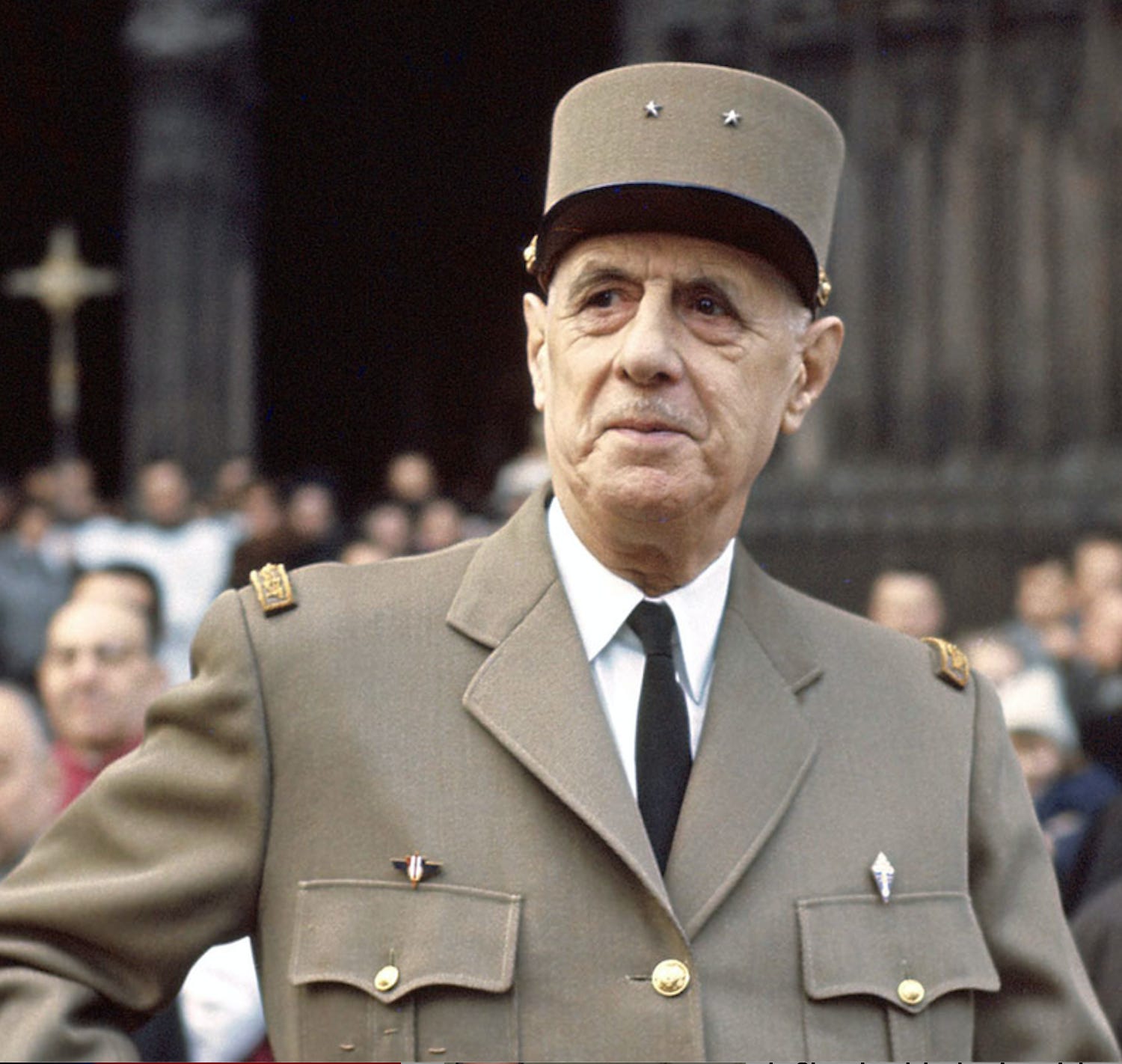
Nor did this hero remain in the Bronze Age. He is a human type, not merely a literary figure, and the twentieth century produced him in the flesh. In the summer of 1940, when France had fallen and signed an armistice, and sober calculation dictated submission, one man declared from London that France had not lost the war. De Gaulle then possessed neither an army nor territory nor legal authority; he possessed only the will to refuse a defeat that everyone else regarded as accomplished. It is the Odyssean arc in its purest form: exile, years of perseverance against the apparently obvious, the return home, and the restoration of name and power.
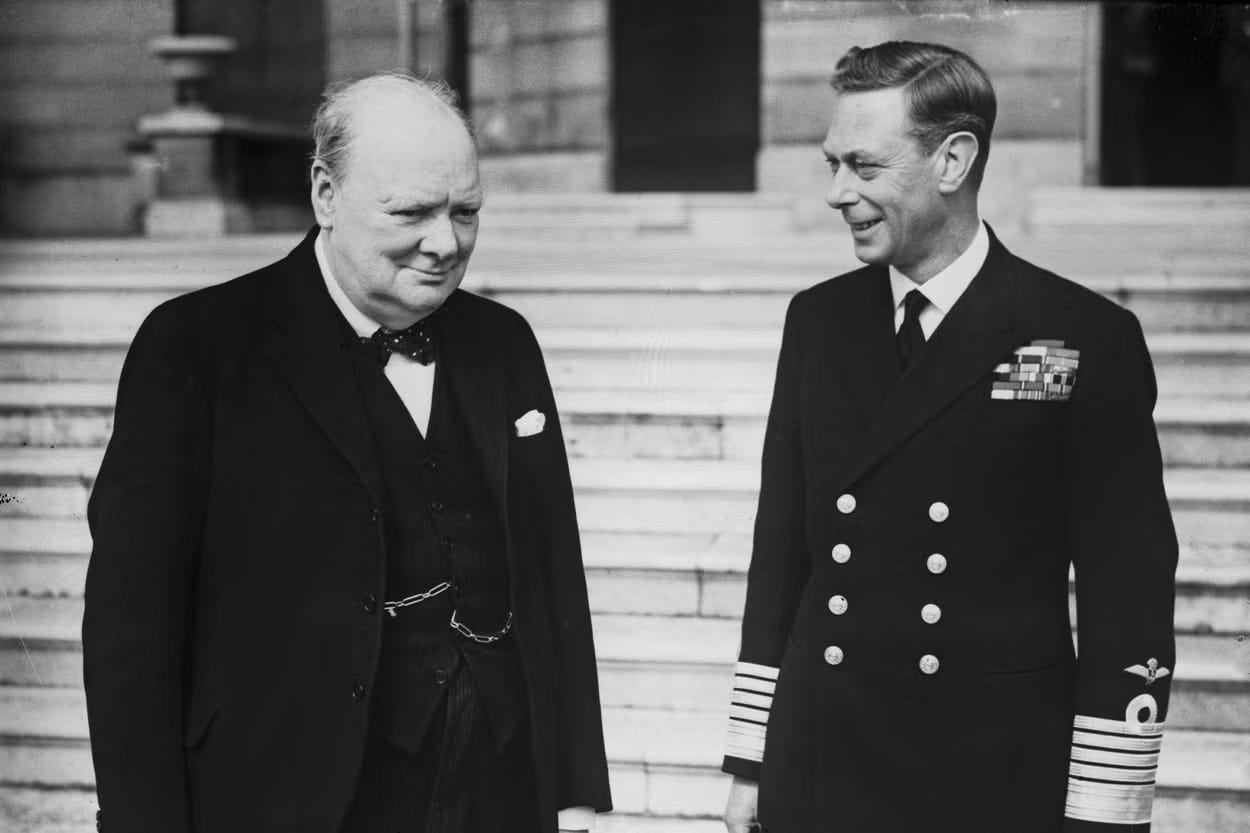
Beside him stood Churchill in the position of Hector—alone against a power that was expected to crush him, fully aware that he might fall, and nevertheless refusing to retreat. These men saved their countries neither through negotiations nor through an abstract revulsion from “war in general,” but through precisely that will to victory which is now so often mocked as a relic.
We need not even look into the past. Homeric epic is unfolding before our eyes. The words of Ukrainian President Volodymyr Zelensky—“The fight is here; I need ammunition, not a ride”—spoken at the beginning of Russia’s full-scale invasion in February 2022, constitute the existential choice of an epic hero. Which present-day Western leader could have said the same? Judging by their policies, it is difficult to expect comparable steadfastness from any of them. Zelensky displays an absolute determination to face fate directly and do everything within his power to overcome it. In him are joined Hector, remaining at the walls of a doomed city, and Diomedes, daring to raise his weapon against the god of war himself.
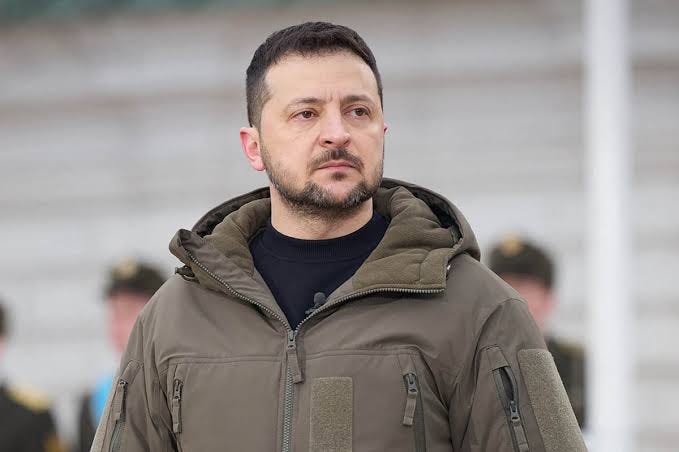
Yet it is precisely here that the central paradox in the relationship between the epic hero and the contemporary world emerges. Confronted with Zelensky, post-heroic society experiences profound internal discomfort.
A post-heroic world accustomed to treating evasion of struggle as “maturity” and safe compassion as “valour” encountered a man who refused to follow the rules of the comfortable managerial ritual. His refusal to flee was not merely a military decision; it was a blow against the very optics of the post-heroic world.
From this grows the sullen irritation, and at times outright hatred, directed at Zelensky by those who preach “peace at any price.” By his very existence and his choice, he confronts this world as an exposing mirror. The hero who accepts battle destroys the comforting myth that “resistance is futile” and forces the advocates of compromise to see themselves for what they are: political and moral dwarfs hiding behind humanistic rhetoric.
The Triumph of Willlessness
The two refusals—the refusal of victory and the refusal to understand the other—spring from the same source and lead to the same result. Victory is renounced for the sake of emotional comfort: victory demands effort, whereas “just peace,” “just negotiations,” and “war is terrible” allow one to avoid choosing and paying any price. Understanding the adversary is renounced for the same reason: it is unpleasant to acknowledge that the enemy is constituted differently and thinks in terms of force and domination; it is easier to imagine him either as exactly like us or as mad.
These two refusals are directly connected, because victory is a result, and a result is born from understanding and will. Understanding supplies the objective—what precisely is to count as victory and how it can be achieved; will supplies the force required to achieve it. Homer understood this: men fight neither for war itself nor for the beauty of suffering within it, but for an outcome—their own victory and the enemy’s defeat. Achilles chooses a short life for the sake of what will outlive him; Hector knows in his heart that “there will come a day when sacred Ilion shall perish,” and nevertheless goes out to fight, because otherwise that day will come too soon; Odysseus struggles homeward for ten years and returns victorious.
This is why the triumph of Nolan’s Odyssey is, in essence, a triumph of the willess. The film takes the story of a man of unbreakable will and a clearly defined purpose and removes both, leaving only an experience: see how frightening and painful it was. The will that captured Troy and conquered the seas, the strength “which in old days moved earth and heaven,” is reclassified as trauma; the purpose for which everything was undertaken—victory and return—is bracketed off as something awkward. The audience applauds precisely this subtraction. It has been shown a hero deprived of both understanding and will, and has recognised itself in him.
These are not abstract reflections. Western policy in Ukraine is the impotence of one who does not wish to act: it wants to help, but not for the sake of victory, and only in ways that will not bring serious trouble upon itself. Years pass, hundreds of thousands of lives are lost, hundreds of billions of dollars are spent, and the aggressor continues the war—because there is no objective of defeating him.
Here the true meaning of an anti-war position is revealed. Are you against war? Then help to end it sooner—through victory over the aggressor, so that both he and everyone watching from the sidelines learn for the future that war ends badly for those who start it. Everything else—“negotiations at any price,” “do not provoke him,” “allow him to save face”—does not end wars but gives birth to new ones.
This is absent both from Nolan and from the public that admires him. What are they celebrating? Fine words about war being bad? Everyone already knows that.
Homer says something different, and far more difficult to accept: once war has been forced upon you, dignity lies not in cursing it but in winning it and returning home. Odysseus did not wish to go to Troy and tried to evade the expedition; but once he found himself at war, he did not stand in the middle of the battlefield preaching peace. He did everything required to end the war in victory; the Trojan Horse was his idea. His return home is likewise a victory, because he overcame everything that stood in his path and recovered his home, his name, and his kingdom. Peace is brought neither by lamentation nor by an awareness of one’s moral righteousness. It is brought only by victory.
Exquisite. Thank you!